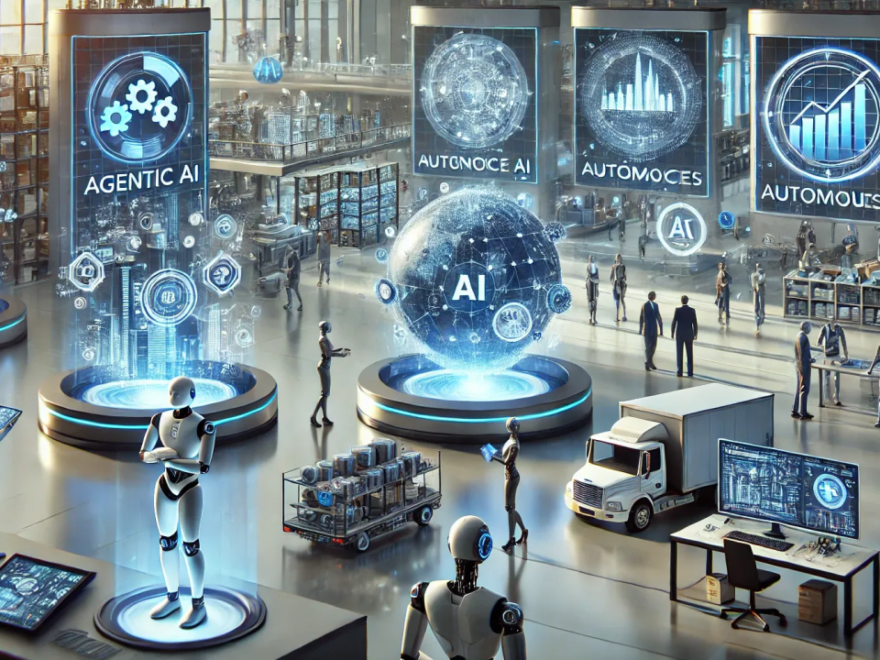
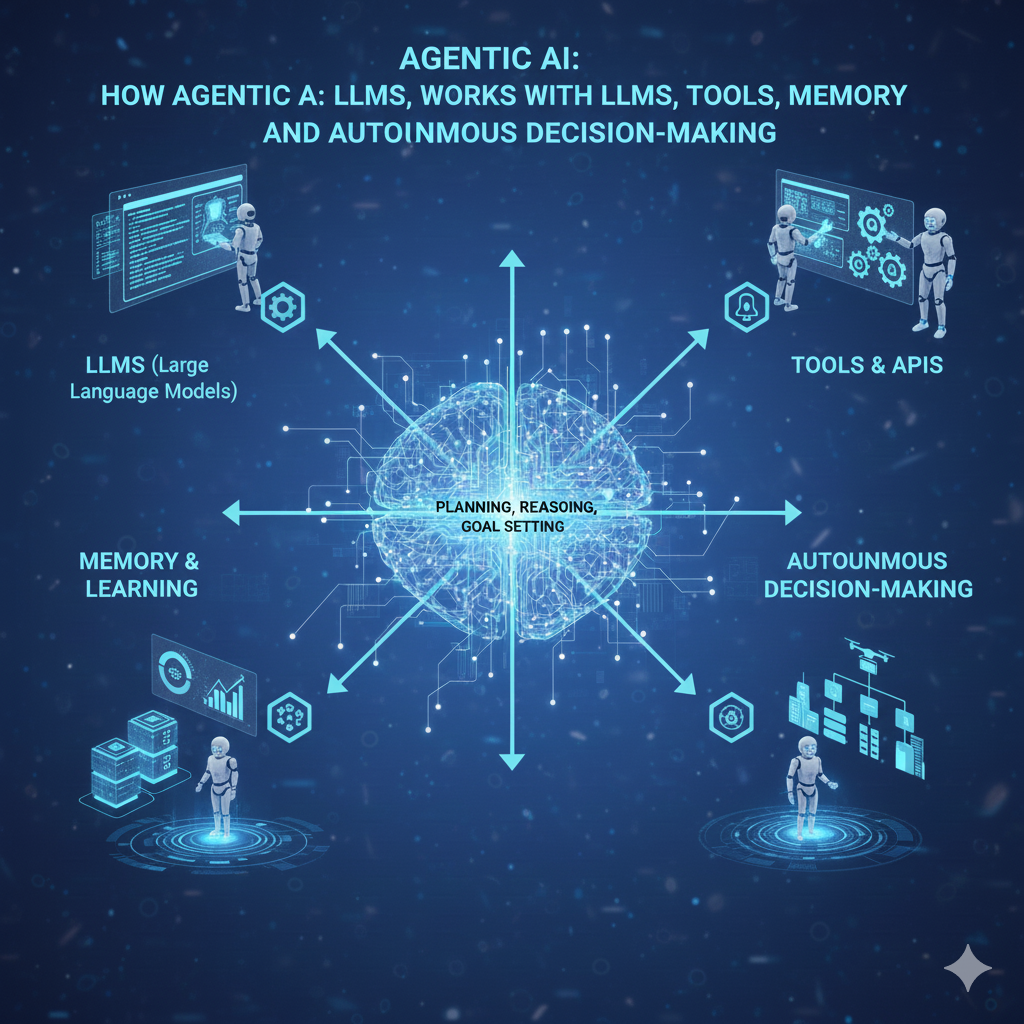
Agentic AI combines several advanced technologies that work together to enable autonomy.
Large Language Models as the Decision Engine
Large language models provide reasoning, context understanding and decision logic. They allow agents to interpret objectives and determine next actions.

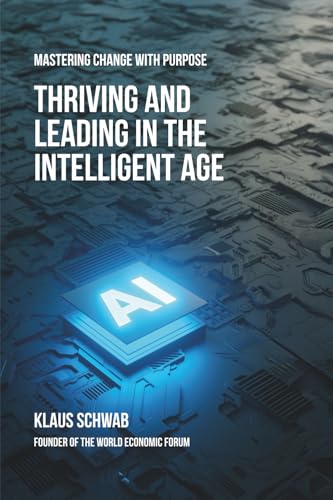


Tool and System Integration
Autonomous AI agents connect directly to:
- Calendars
- CRMs
- Analytics platforms
- Code repositories
- Internal business systems
This allows them to take real actions, not just generate suggestions.
Memory and Context Awareness
Agentic AI systems store context across steps, enabling them to work on long-running tasks without losing direction.
Autonomy and Decision Logic
Agents evaluate progress, adjust strategies and determine when a task has been successfully completed.
Together, these components allow autonomous AI workflows that previously required constant human supervision.
Why Agentic AI Matters for Work and Productivity in 2025
For years, AI helped individuals work faster. In 2025, agentic AI is helping organizations work differently.
Instead of optimizing isolated tasks, companies are automating entire workflows end to end.
In real-world deployments, agentic AI is already being used to:
- Reduce operational bottlenecks
- Accelerate decision-making cycles
- Lower administrative workload
- Improve consistency and accuracy
The most important shift is not speed.
It is autonomy at scale.
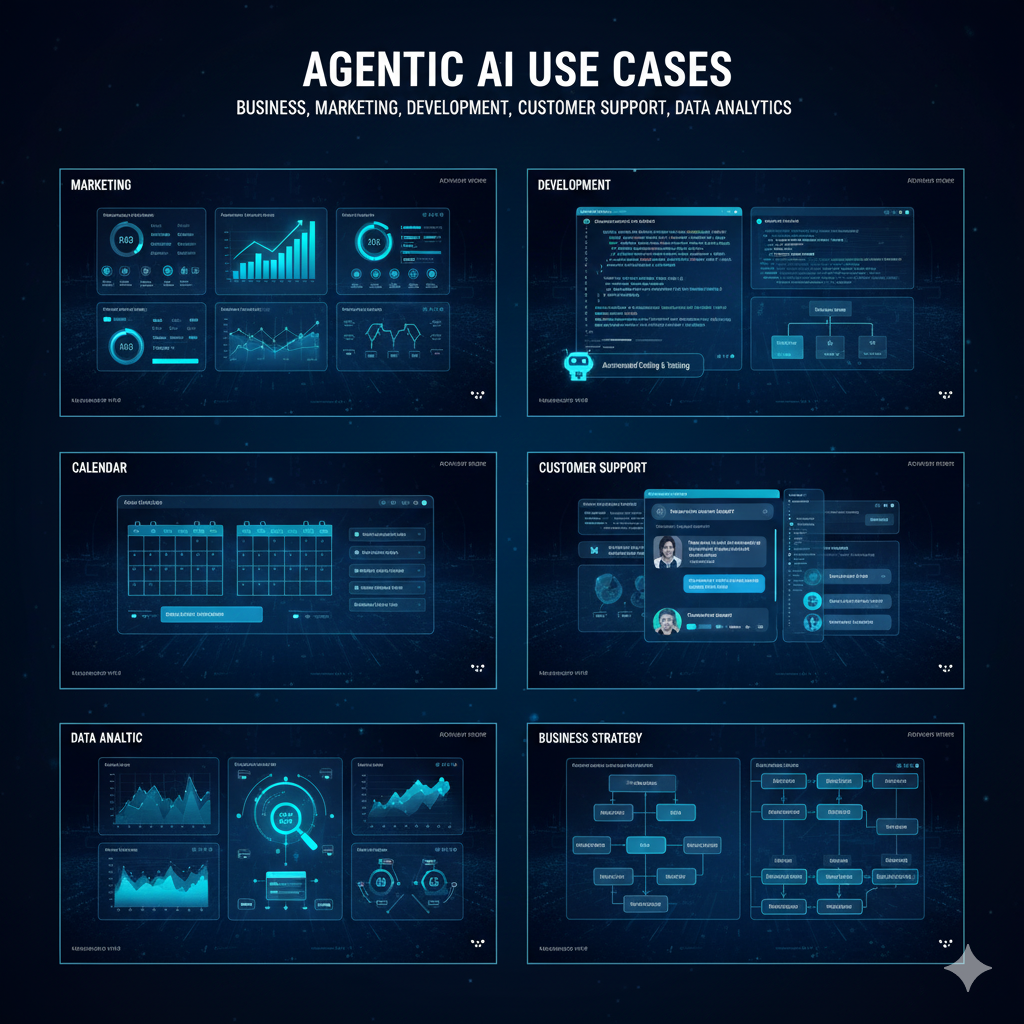
What Tasks Can Agentic AI Perform at Work?
Agentic AI performs best in workflows that are structured, repetitive and multi-step.
Workflow Automation
Autonomous AI agents can handle:
- Scheduling meetings and managing calendars
- Monitoring inventory and triggering reorders
- Generating reports and distributing them automatically
Once the objective is defined, execution happens without repeated prompts.

Software Development and IT Operations
In technical environments, agentic AI can:
- Write and review code
- Run automated tests
- Manage CI/CD pipelines
- Monitor systems and respond to incidents
This is especially valuable for long-duration tasks that require persistence.
Marketing and Sales Operations
Agentic AI can autonomously:
- Segment audiences
- Run continuous A/B tests
- Optimize advertising budgets
- Personalize campaigns in real time
This reduces manual setup and improves return on investment.
Customer Support and Engagement
Unlike scripted chatbots, agentic AI systems can:
- Understand complex customer requests
- Take real actions like resets or refunds
- Follow up until the issue is resolved
Finance and Analytics
In finance teams, agentic AI can:
- Collect and clean data
- Detect anomalies
- Generate forecasts
- Deliver insights automatically
In practice, it functions like a 24/7 digital analyst.
What Agentic AI Is Not
Despite growing capabilities, it is important to set realistic expectations.
Agentic AI Is Not a Full Human Replacement
Agentic AI replaces tasks, not people. Humans remain essential for strategy, creativity and oversight.
Agentic AI Is Not Sentient
Autonomous AI agents have no awareness, intent or emotions. They operate strictly within defined goals and constraints.
Agentic AI Is Not Plug-and-Play
Poor data quality and poorly defined workflows will lead to poor results. Governance and design are critical.
Real Productivity Benefits of Agentic AI
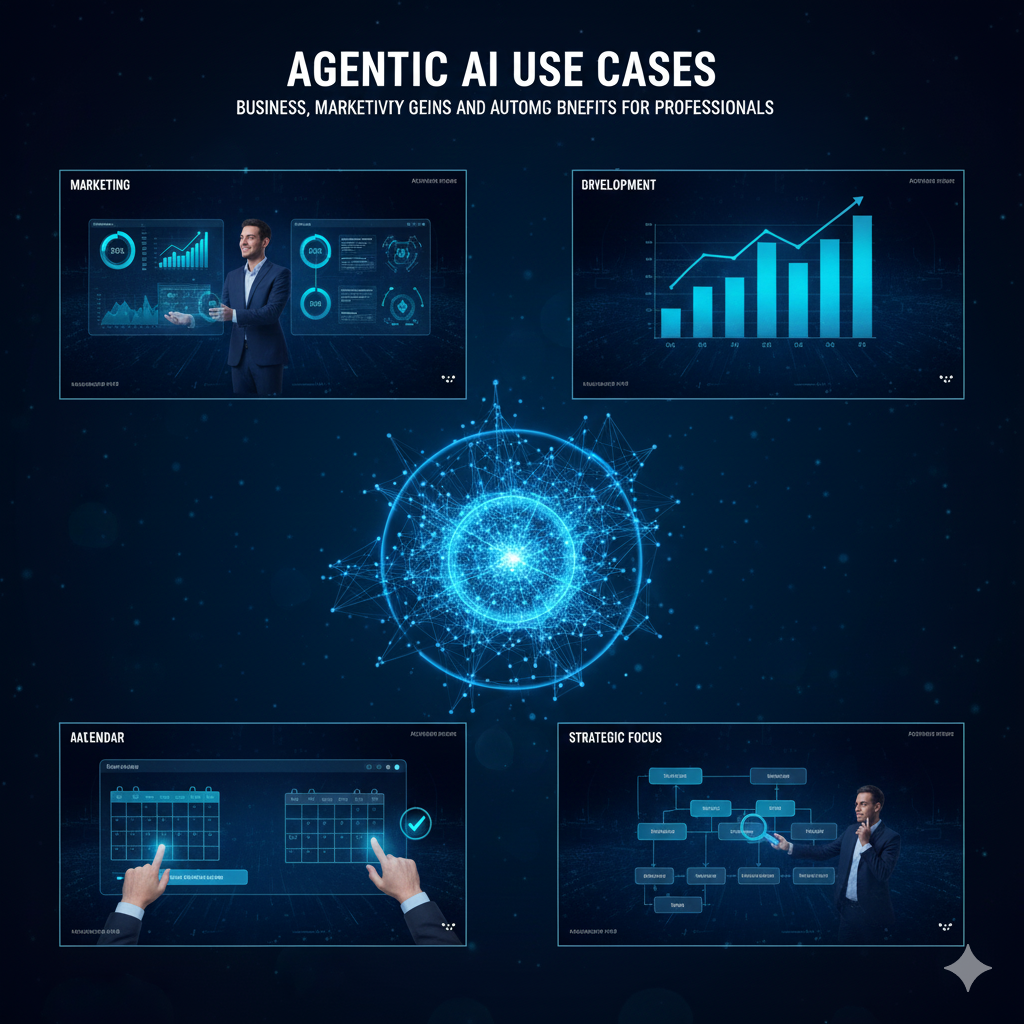
When implemented correctly, agentic AI improves productivity by:
- Eliminating repetitive administrative work
- Reducing context switching
- Accelerating execution
- Improving consistency across operations


In real teams, this often shifts human focus away from operational tasks toward higher-impact work.
As AI systems become more autonomous, productivity is no longer limited to software running on a desktop. Wearable technology is increasingly playing a role in how professionals manage focus, health, notifications and decision-making throughout the day.
If you are curious how smart devices integrate into modern workflows, you may also find it useful to explore how advanced smartwatches are evolving as productivity tools, such as in our detailed reviews of Apple Watch and Garmin models.
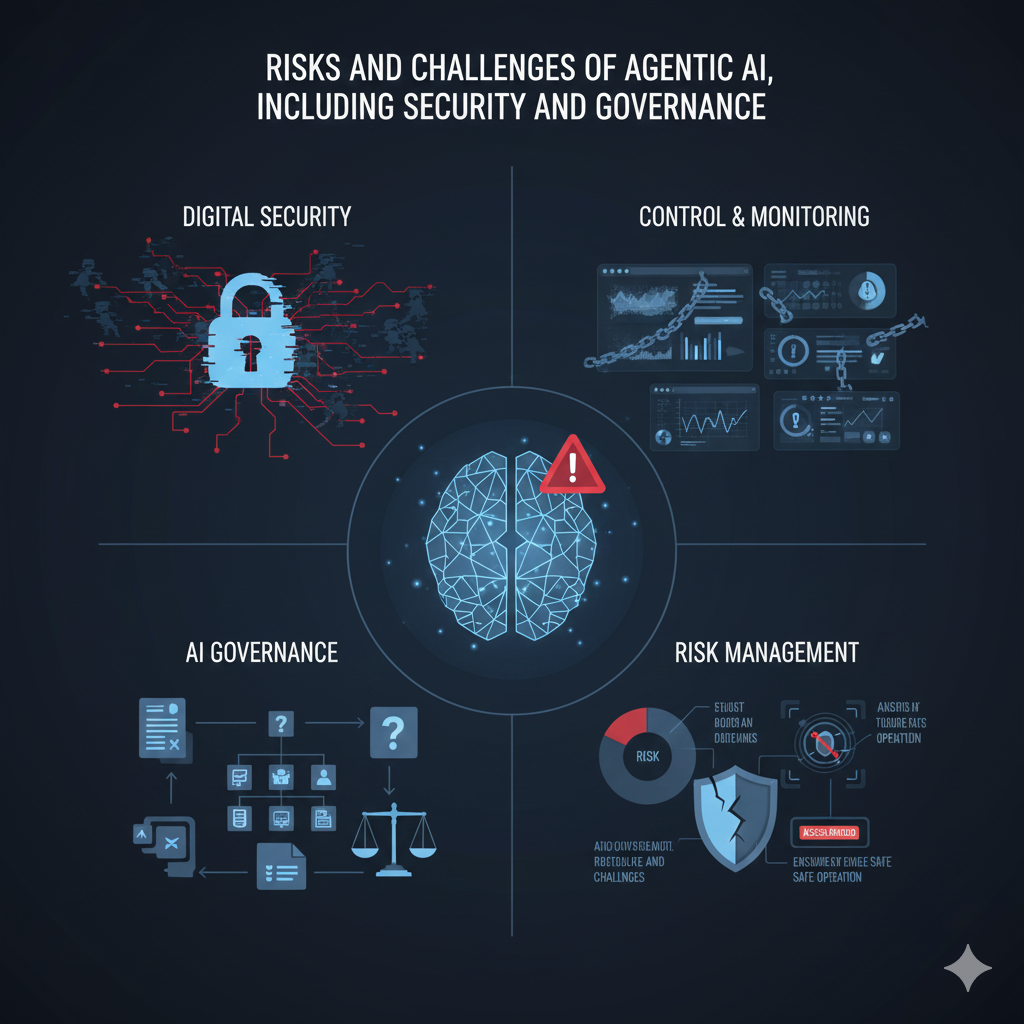
Challenges and Risks of Agentic AI Adoption
Data Quality and Reliability
Autonomous agents act on data. Inaccurate or outdated data leads to flawed decisions.
Governance and Accountability
Organizations must track agent actions, decision logic and responsibility.
Security Risks
Agentic AI requires system access, increasing the need for strict access controls and monitoring.
Workforce Adaptation
Employees must be trained to collaborate with autonomous AI systems, not compete with them.
Industries Leading Agentic AI Adoption
Agentic AI adoption is accelerating in:
- Financial services with autonomous analytics and fraud detection
- Manufacturing with supply chain optimization
- Telecom with advanced customer support agents
- Software companies automating DevOps pipelines
These industries benefit because their workflows are already data-driven.
Frequently Asked Questions About Agentic AI
1. Will Agentic AI replace human jobs?
No. Agentic AI replaces repetitive workflows, allowing humans to focus on strategy, creativity and decision-making.
2. Can agentic AI systems make mistakes?
Yes. Like any system, results depend on data quality, design and governance.
3. What skills are needed to implement agentic AI?
Organizations need expertise in data engineering, workflow design, AI governance and change management.
4. Is agentic AI secure?
Security depends on implementation. Best practices include access controls, sandboxing and continuous monitoring.
5. Which tasks should be automated first?
Start with predictable, rule-based workflows such as reporting, scheduling and data processing.



The Future of Work With Agentic AI

Agentic AI represents a shift from AI as a tool to AI as a collaborator.
The future of productivity will not be about working harder, but about humans working alongside autonomous systems that execute work at scale.
Organizations that adopt agentic AI thoughtfully in 2025 will gain efficiency, resilience and competitive advantage.
Next Step: Explore Agentic AI Tools and Frameworks
This article is part of a broader content cluster on autonomous AI and productivity.
If you want to go deeper into:
- Agentic AI tools
- Real-world implementations
- Platform comparisons
- Adoption frameworks
Explore the related articles in this series and see how agentic AI performs across different business scenarios.

One comment